Bottom-up Membrane Models
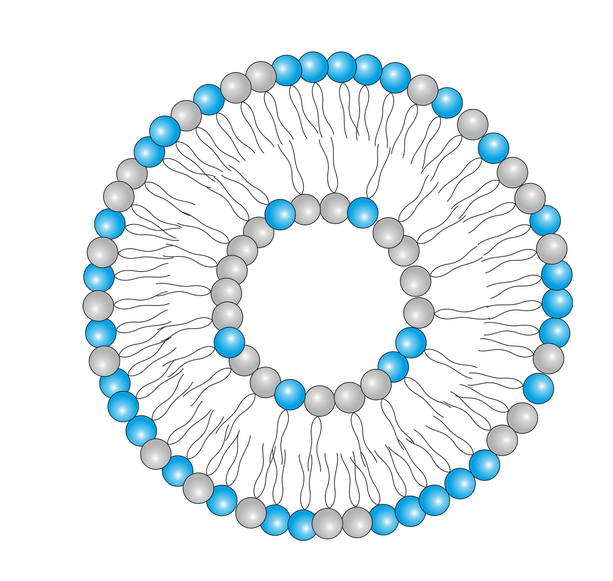
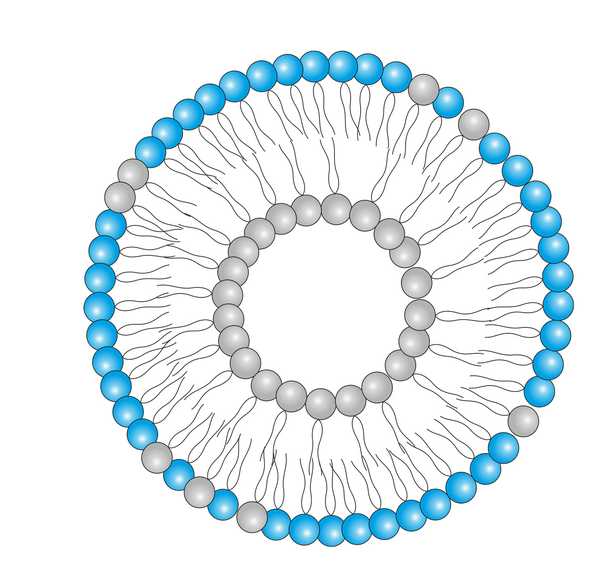
Cell membranes are made up of thousands and thousands of different membrane lipids and membrane proteins. Their exact composition changes constantly. Because of this complexity, it is not possible to study the exact molecular relationships in living membranes. Therefore, we reconstruct biological membranes with as few but important components as possible. With this "bottom-up" strategy, we can determine exactly what "our" membranes are made of. This means that membrane properties (thickness, elasticity, etc.) can be traced back to their molecular components. We make sure that our artificial membranes are as close to the original as possible.
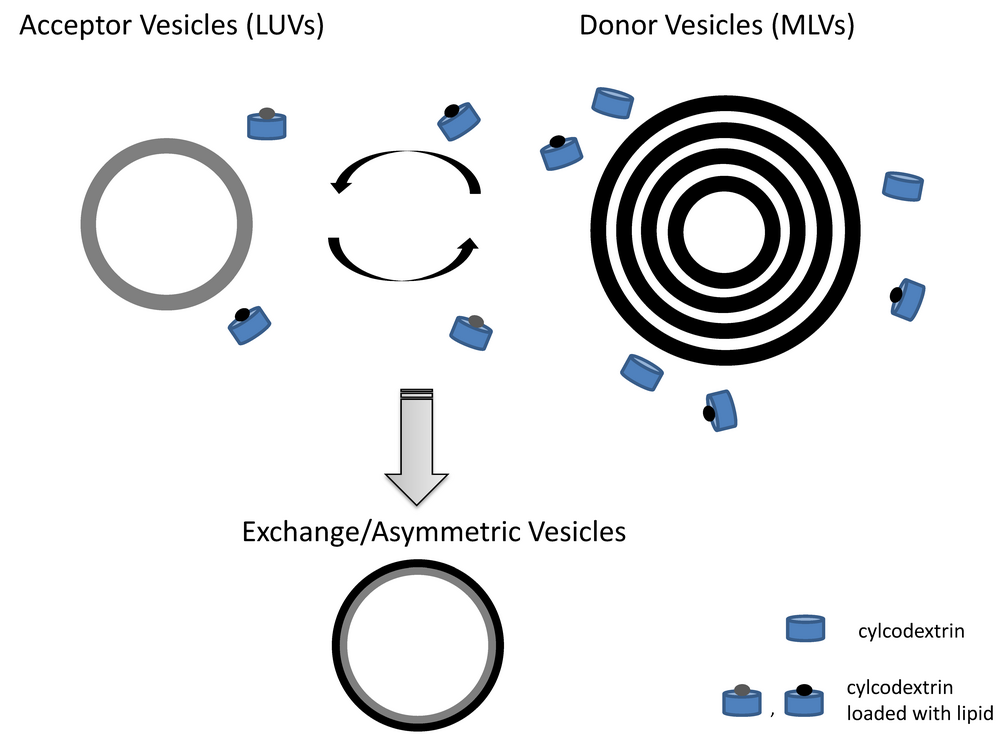
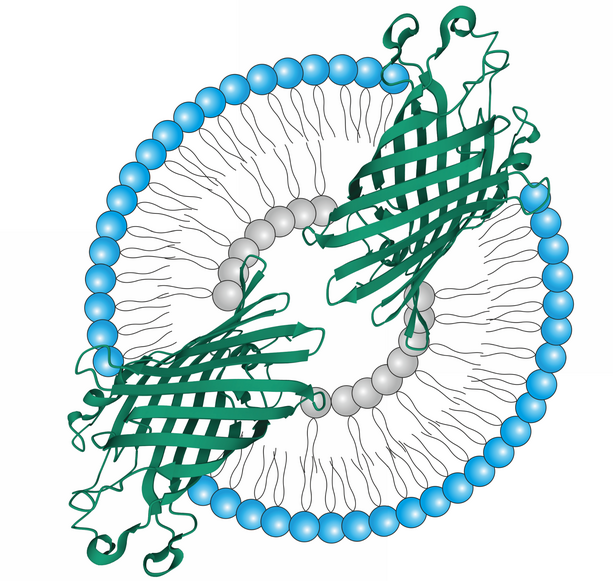
In our laboratory, we have co-developed a method to produce membranes with an asymmetric composition. We use cyclodextrin to exchange lipids in the outer layer of the membranes (approx. 100 nm liposomes). The advantage of this method is that it works with many different lipids. We can also incorporate membrane proteins into these special membranes. We have published our exact procedure in the journal Nature Protocols . However, we are still working on making the method even better.
Publications:
- Piller et al, PNAS Nexus 2: 1 - 7 (2023). DOI: 10.1093/pnasnexus/pgad126.
- Doktorova et al, Nat. Protoc. 13, 2086 - 2101 (2018). DOI: 10.1038/s41596-018-0033-6
- Heberle, et al, Langmuir 32: 5195 - 5200 (2016). DOI: 10.1021/acs.langmuir.5b04562